

Why Can Nasal Polyps Feel Like a Cold That Never Completely Clears?
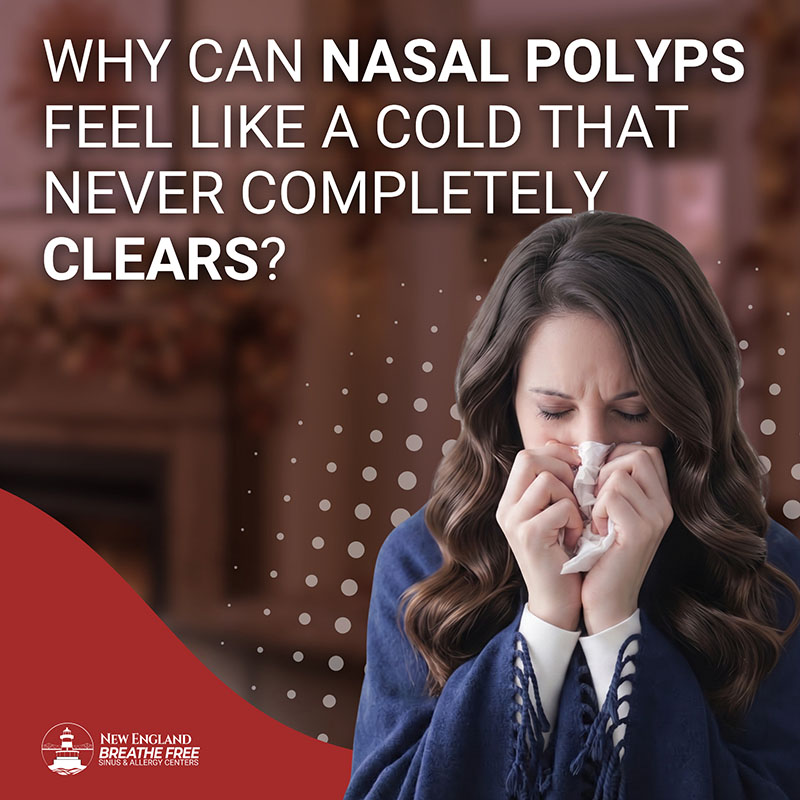
A stuffy or runny nose, postnasal drip, reduced smell, and facial pressure can make nasal polyps feel like a cold that never fully resolves. Unlike a common cold, however, nasal polyps are not caused by a short-term viral infection.
Nasal polyps are inflammatory growths that can obstruct airflow and occur with chronic inflammation inside the nose and sinuses. Symptoms may remain for weeks or months rather than gradually improving as expected with a cold.
At New England Breathe Free, patients in Fall River, Massachusetts, and nearby communities can receive an evaluation to determine whether persistent cold-like symptoms may be related to nasal polyps, chronic sinus inflammation, allergies, or another condition.
What Are Nasal Polyps?
Nasal polyps are soft, painless, noncancerous growths that form in the tissue lining the nose and sinuses. They are associated with long-term inflammation and usually develop on both sides of the nasal cavity.
Small polyps may cause no noticeable symptoms. Larger polyps or groups of polyps can obstruct the nasal passages and interfere with airflow, drainage, and the sense of smell.
Common symptoms associated with chronic rhinosinusitis with nasal polyps may include:
- Persistent nasal congestion
- A runny nose
- Difficulty breathing through the nose
- Postnasal drip
- Reduced or absent sense of smell
- Reduced perception of flavor
- Facial pressure or headache
- Snoring or mouth breathing
- Recurrent or persistent sinus symptoms
These symptoms are not unique to nasal polyps. Allergies, infections, a deviated septum, enlarged turbinates, and other conditions can produce similar complaints.
Why Do Nasal Polyps Develop?
Nasal polyps are associated with chronic inflammation in the nose and sinuses. Researchers do not fully understand why some people with nasal inflammation develop polyps while others do not.
Conditions commonly associated with nasal polyps include:
- Chronic rhinosinusitis
- Asthma
- Allergic rhinitis
- Aspirin-exacerbated respiratory disease
- Cystic fibrosis
- Certain immune or inflammatory conditions
Allergies may contribute to nasal inflammation in some patients, but they do not explain every case of nasal polyps.
Why Can Nasal Polyps Feel Like a Persistent Cold?
Colds and nasal polyps can produce several overlapping symptoms. The difference is that a cold is a temporary viral illness, while nasal polyps are associated with ongoing inflammation.
Persistent nasal congestion
Polyps and surrounding inflammation can narrow the nasal passages. This may create a blocked or stuffy sensation that continues long after a typical cold would be expected to improve.
Runny nose or postnasal drip
Inflamed nasal and sinus tissue may produce additional mucus. Obstructed drainage pathways may also allow mucus to collect or move down the back of the throat.
Reduced smell and flavor
Polyps and swelling can prevent odor molecules from reaching smell receptors located high inside the nose. Inflammation may also affect normal smell function.
Because smell contributes significantly to flavor, food may seem bland even when the basic ability to detect sweet, salty, sour, bitter, and savory tastes remains intact.
Facial pressure or headache
Chronic sinus inflammation may produce pressure or discomfort around the forehead, cheeks, or eyes. Polyps themselves are painless, so facial pain may indicate accompanying sinus inflammation or another condition rather than the growths alone.
Mouth breathing and snoring
Significant nasal obstruction may lead to mouth breathing, particularly during sleep. Some people may also experience snoring, although snoring has many possible causes and does not confirm the presence of nasal polyps.
How Can You Tell a Cold From Nasal Polyps?
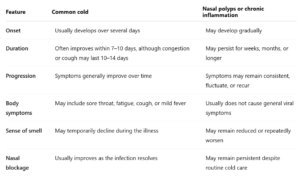
Symptoms alone cannot always distinguish a cold from nasal polyps, but their pattern and duration may provide clues.According to the Centers for Disease Control and Prevention, runny nose and cough associated with a cold can last up to 10–14 days but should improve over time.
Does Mucus Color Tell You the Difference?
Not reliably. Mucus may become white, yellow, or green during a viral cold, and this color change does not automatically indicate a bacterial infection.
Nasal polyps and chronic sinus inflammation may occur with clear or discolored drainage. Mucus color alone cannot determine whether nasal polyps, a viral illness, or a bacterial infection is responsible.
How Are Nasal Polyps Diagnosed?
An evaluation may begin with questions about:
- How long symptoms have been present
- Whether one or both sides are affected
- Whether the symptoms repeatedly return
- Whether smell has changed
- Whether allergies or asthma are present
- Which medications or home treatments have been tried
A provider may examine the nose and perform nasal endoscopy when appropriate. This examination uses a thin instrument with a light or camera to look for polyps, swelling, drainage, or another obstruction.
CT imaging or allergy testing may be recommended when additional information is needed. Imaging is not necessary for every patient.
How Are Nasal Polyps Treated?
Treatment is individualized based on the severity of the inflammation, the extent of the polyps, accompanying medical conditions, and the effect symptoms have on daily life.
Options may include:
- Corticosteroid nasal sprays or rinses
- Saline nasal irrigation
- Treatment of contributing allergies
- Short-term oral corticosteroids in selected cases
- Biologic medications for certain patients
- Endoscopic sinus surgery when symptoms or obstruction persist despite appropriate medical treatment
Treatment may shrink or remove polyps and improve symptoms, but polyps can return. Some patients may need continued medical management after symptoms improve or after surgery.
When using nasal irrigation, use distilled, sterile, or previously boiled and cooled water. Clean the irrigation device according to its instructions.
When Is It Time to Schedule an Evaluation?
Consider scheduling an evaluation when:
- Cold-like symptoms last longer than 10–14 days without improvement.
- Nasal congestion persists or repeatedly returns.
- The sense of smell remains reduced.
- Nasal symptoms interfere with sleep or daily activities.
- Symptoms do not improve with appropriate allergy or cold treatment.
- Facial pressure or other sinus symptoms continue for several weeks.
- Recurrent symptoms suggest chronic sinus inflammation.
Seek prompt medical attention for rapidly worsening symptoms, swelling or pain around an eye, vision changes, a severe or worsening headache, forehead swelling, confusion, or neck stiffness.
Nasal polyps usually occur on both sides. A growth, persistent obstruction, recurrent bleeding, or foul-smelling discharge affecting only one side warrants medical evaluation because not every nasal mass is a benign polyp.
Frequently Asked Questions
Can nasal polyps go away without treatment?
Polyps may sometimes become smaller, but they rarely disappear completely without treatment. The symptoms and appropriate next steps vary by patient.
Can nasal polyps cause a fever?
Nasal polyps do not typically cause fever. Fever may suggest an infection or another illness and should be considered with the rest of the symptoms.
Can nasal polyps cause facial pain?
Polyps themselves are usually painless. Facial pressure or pain may be related to accompanying sinus inflammation or another condition.
Are nasal polyps cancerous?
Typical nasal polyps are benign. However, a persistent one-sided growth or obstruction should be evaluated because other types of nasal masses can appear similar.
Will removing nasal polyps permanently cure the problem?
Treatment may improve airflow, drainage, and other symptoms, but nasal polyps can recur. Results and long-term management needs vary.
When a “Cold” Does Not Clear
Nasal polyps and chronic sinus inflammation can cause congestion, drainage, reduced smell, and facial pressure that resemble a cold. The persistence of these symptoms—rather than any single symptom—may indicate that something other than a temporary viral illness is involved.
New England Breathe Free provides ear, nose, and throat care for patients in Fall River, Somerset, Westport, Dartmouth, and surrounding Massachusetts communities.
If cold-like symptoms do not improve or continue returning, contact New England Breathe Free to discuss an evaluation and appropriate treatment options.